
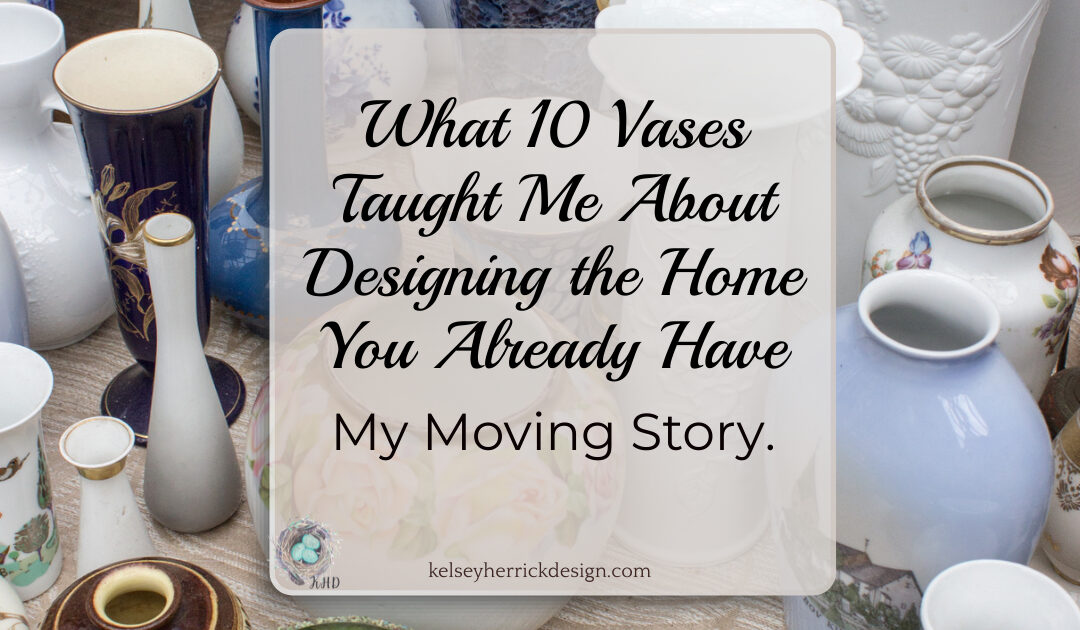
When I started packing up my home to move in with Drew and our new home together, I thought I knew what to expect. The boxes. The labeling. The moments of overwhelm. What I didn’t expect was to be standing in my living room surrounded by ten vases. Ten. Each one was collected over time, from different places, for different reasons. Each one was something I liked enough to keep in the moment and put away in a cabinet over the years. But over time I never had a reason to gather (or count!) them in the same place at the same time, until that moment. And once I finally saw them all in one place, staring at this army of ceramics and glass, I asked myself the question my clients ask me all the time: what do I actually keep?
That question about what stays, what goes, and what gets reimagined turned out to be the most clarifying design exercise I’ve done in years. Because moving, whether it’s into a new space, combining two households, or simply starting fresh in a room that isn’t working, forces you to be honest. And in that honesty, there is so much opportunity.
So if you’re in the middle of a move, or simply standing in a space that feels cluttered or disconnected from who you are now, here’s how I’m thinking through it, as a designer and as someone who just lived it.
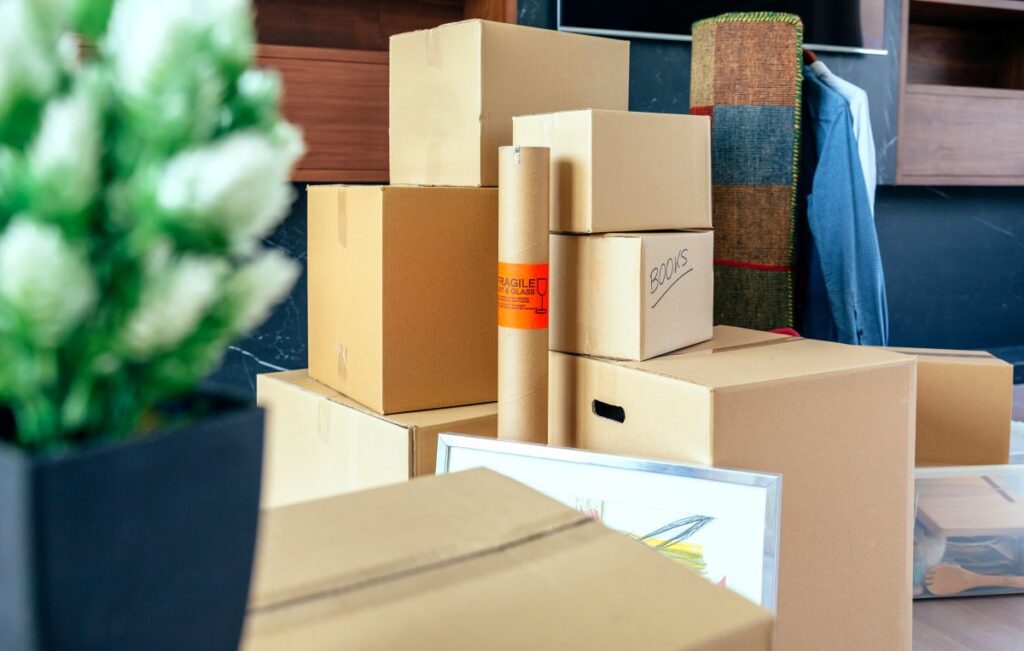
First, let’s talk about the edit and why it’s the most important design decision you’ll make.
Here’s what I’ve learned after years of working with clients: the homes that feel the most beautiful aren’t always the ones with the most furniture or the most square feet. They’re the ones where every piece has a reason to be there. The edit is the design.
One of my longest-standing clients and I have now worked together seven times. Seven. Because they have a career that involves moving around the country. And the work we do is many times about repurposing favorite items into new homes that they weren’t originally intended for. And that represents the reality for most people. Early on, it’s about building the foundation, finding the right sofa, the right rug, and establishing a palette. Creating a moment. But over time, as this client has moved (and a goal as I move), the work became about refining. About making intentional decisions on what earned a place in the room. That’s the evolution I want for every home I touch, including my own. So while moving is a big change, you don’t have to start from scratch or mindlessly take every item with you. Choose quality, edit and refine, and that helps to keep the disruption minimal for the entire household.
So, how many of something do you actually need?
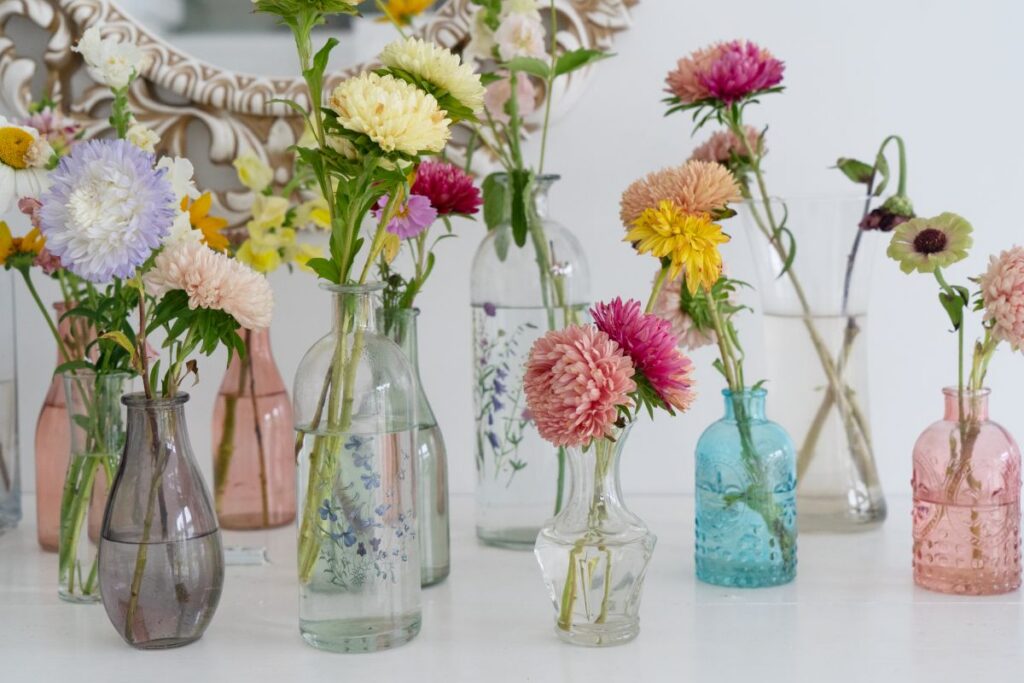
This is where the vases come back in. The answer isn’t one, and it isn’t ten. The answer is: enough to use intentionally. I kept a curated selection and started thinking about where each one could live with purpose. A tall, dramatic piece on the entryway console. A small cluster of three on the dining table. A single bud vase on the bathroom shelf. What felt like an overwhelming surplus became a styling toolkit because I chose each placement with intention rather than just finding a surface to fill. And I intentionally pared down my collection to what I loved and would actually use.
The same principle applies to everything. Throw blankets. Candles. Picture frames. When you can see what you have, all at once, you can finally make real decisions about what earns its place in your home.
Next, before you shop, look at what you already own.
This is one of the most underutilized design strategies I know, and it saves my clients the most money and time. Moving is the perfect time to see your belongings with new eyes. That lamp you’ve had in the bedroom? It might be exactly right for the new reading nook. The console table that felt too small in your old entryway could be perfect as a landing spot in a new hallway, or even styled as a bar cart.
Repurposing isn’t settling. It’s a smart and thoughtful design strategy. You already know you love these pieces. You chose them. Now give them a chance to shine somewhere new. Before you order anything, do a full walkthrough of what you have and accessorize from your own home first. You’ll be surprised what you find. And that saves you money, because whatever you choose next you can do so based on quality and purpose instead of rushing to fill a empty space. In the world of fast furniture, thoughtfully choosing a quality or custom piece that lasts and is meant to solve a problem is a great way to elevate the design in your home and create moments where they matter most.
Then, let’s talk about what decluttering actually does for a space.

There’s a reason that when I walk into a home that doesn’t feel right, the first thing I often do is take things away and/or suggest an organizing solution that will help a client utilize what they have. Decluttering is a design tool, not just a chore. When a space is overcrowded, the eye doesn’t know where to land, and neither does the feeling you’re trying to create. I see this all the time in kitchens that feel crowded and don’t have specific zones or a bathroom that lacks cabinetry and storage.
Let your home breathe. Let each piece have space to be seen. Showcase what you love. Sometimes, less really is more, and that’s not a compromise. That’s confidence in your design. And when everything has a place, you can enjoy your home in peace.
Now let’s talk about one of the most overlooked solutions: storage.
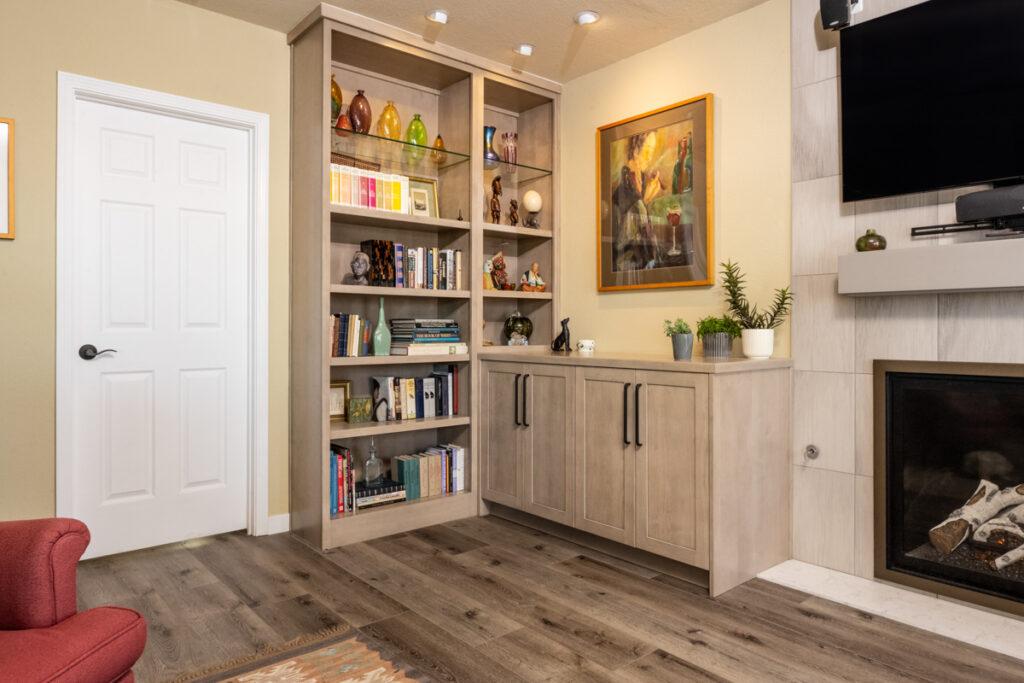
A place for everything, and everything in its place. I know it sounds simple, but it is genuinely transformative. When your home has real, intentional storage, not just shoving things into a closet, you stop buying duplicates. You stop doing that thing where you pick up another set of napkin rings at a Sunday market because you couldn’t remember if you had any. You stop accumulating the random, the unnecessary, and the “just in case.”
Good storage is the antidote to impulse buying and fast furniture. It’s what allows you to invest thoughtfully rather than constantly refresh. And speaking of refreshing: if you find yourself restless with a room, nine times out of ten, the answer is not a new sofa. Change your pillows first. Swap the throw. Introduce a new piece of art. Incorporate custom window treatments to help set the mood in a space. The bones of a well-designed room can carry you through years of evolution with small, intentional updates.
And finally, a word about trends and intentional design
Trends are designed to inspire and in some cases make you spend. The furniture industry, much like fashion, has moved toward faster and faster cycles, and our homes have paid the price. Rooms that looked “on trend” two years ago can already feel dated. Quality pieces, custom sourced finds, and items that genuinely speak to who you are have a much longer life in your home.
Invest in the pieces you truly love. Choose pieces with actual character and a story (and if you don’t know the story you’d like to tell, I can help). Build a home that tells your story, and know that story gets richer, not replaced, with time.
If you’re navigating a move, combining households, or simply ready to take a fresh look at the home you already have, I’d love to help. Whether it’s editing what you own, designing around your existing pieces, or creating a space that finally feels like you, reach out. I’d love to work through it with you.
Kelsey Herrick TenBruggencate is the founder and lead designer for her company, Kelsey Herrick Design, LLC. Kelsey is passionate about using her experience as an interior designer to create a space you love. Kelsey is known for her creative utilization of space, use of rich colors and textures, and problem-solving skills. Contact Kelsey Herrick to learn more.
Recent Comments